
Zero Degrees · Materials guide
What sets the stones and metals we offer apart, in plain words, so you can choose the one that suits how you'll wear your ring.
I · The stone
Natural and lab-grown are both real diamonds. Moissanite is a different stone that looks like a diamond, with its own kind of sparkle.
Think of it like ice: one froze in nature, the other in a freezer. It's the same thing, only made in a different place.
A different stone that looks very much like a diamond and costs much less.
Diamond · white light, depth
Moissanite · rainbow fire
From the earth
From the "freezer"
Same ice. Same hardness, same sparkle, same diamond. The difference is where it was made, and the price.
II · The metal
9K, 14K and 18K are all real gold. The number tells you how much of the metal is pure gold. The rest is other metals, mixed in for strength and colour.
Gold bars show pure gold content; the platinum bar shows pure platinum content.
| 9K | 14K | 18K | Platinum | |
|---|---|---|---|---|
| Scratches | ●●● Hardest, scratches least | ●● In between | ● Softer, scratches more | ●● Marks, but metal isn't lost |
| If knocked hard | More brittle: can crack instead of bend | In between | Bends, rarely breaks | Strongest, most durable |
| Shine over time | Dulls and darkens fastest | In between | Stays shiniest longest | Naturally white, never yellows |
| Known for | Everyday budget pick | The balanced choice | The high-jewellery standard: Cartier, Tiffany & Co., Bvlgari | The best choice for white |
What really matters later
On the first day, every white metal looks bright. What sets them apart is how they look after a couple of years of wear.
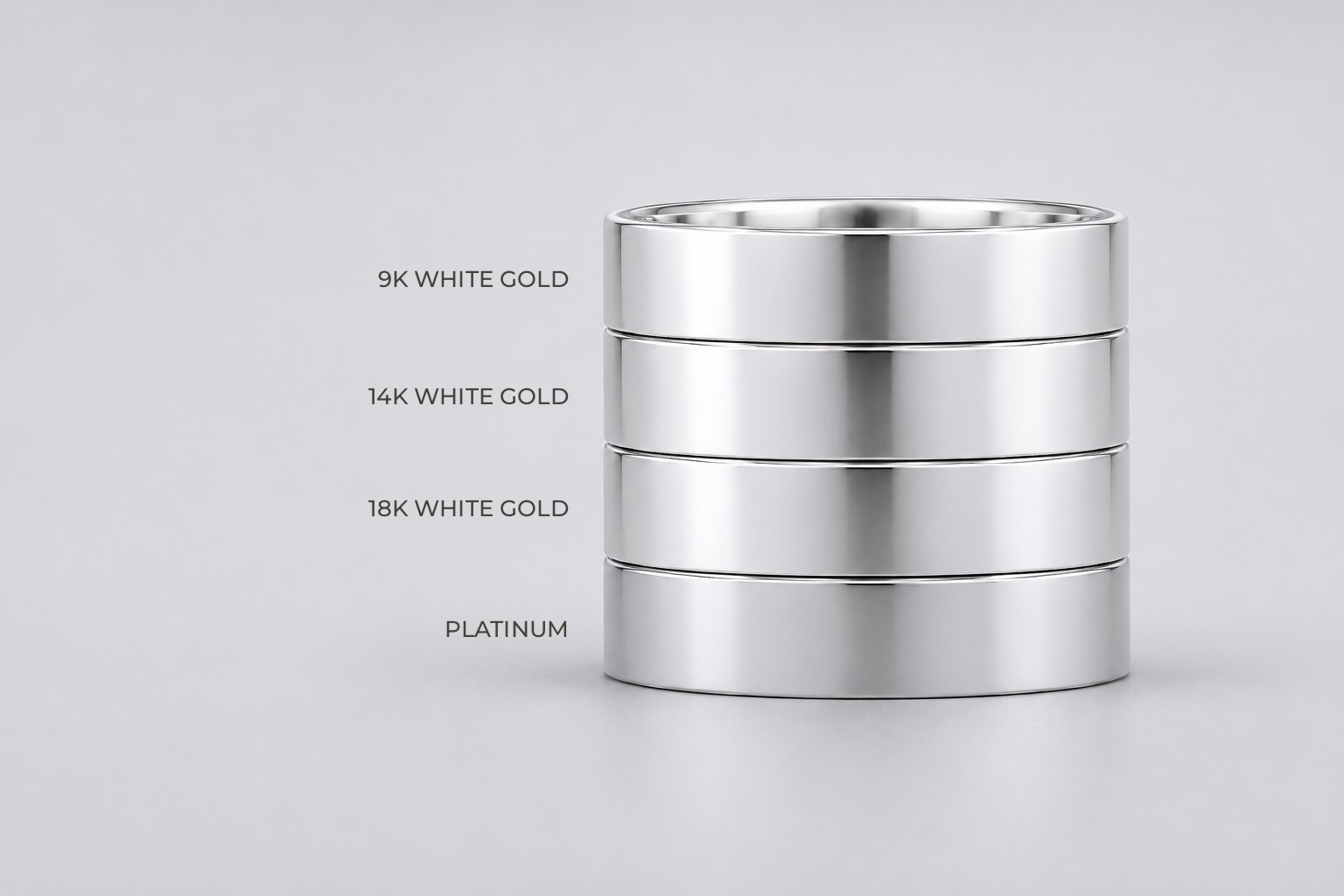
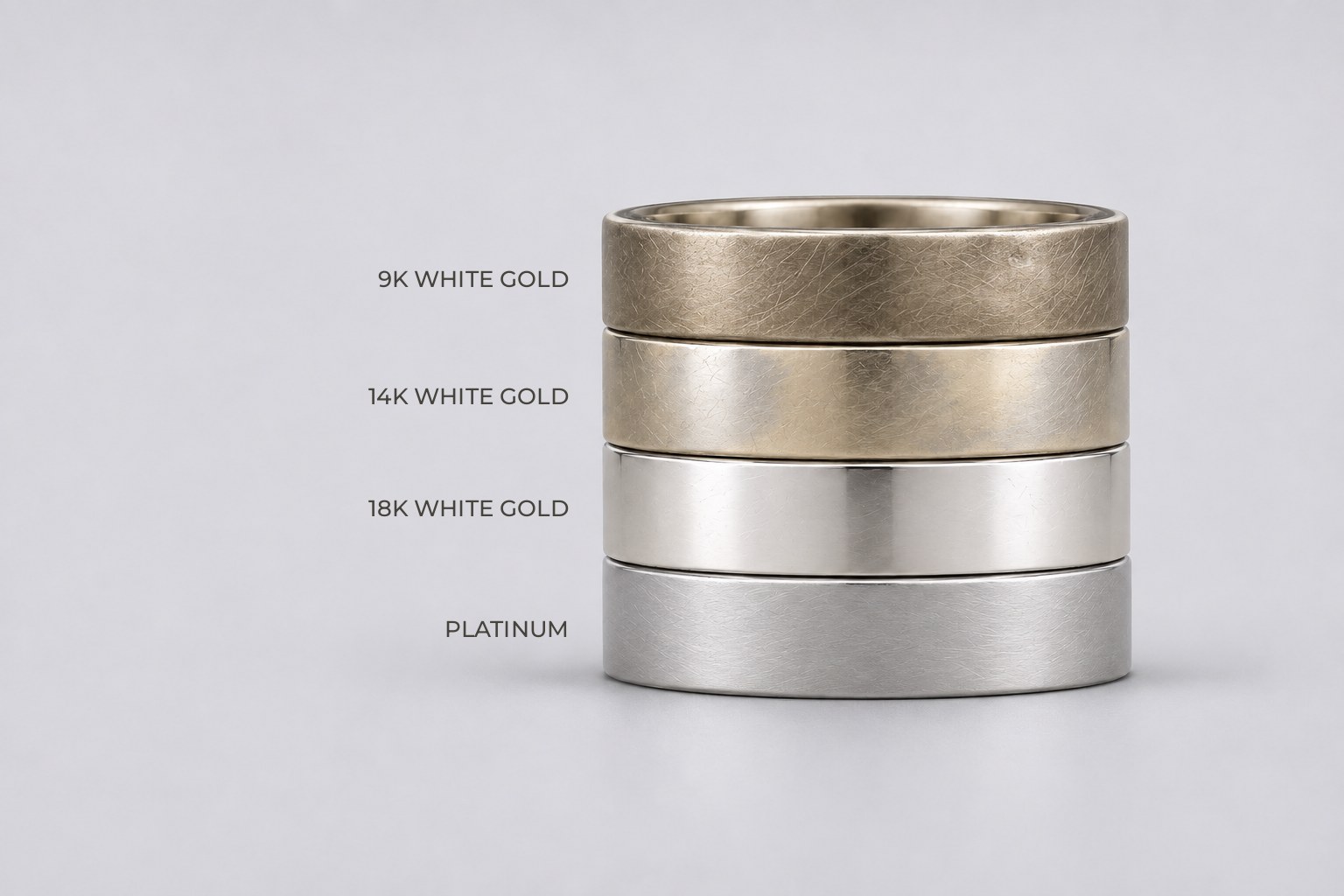
Illustration for comparison. Real wear depends on how the ring is worn and cared for.
Keeping it white
Gold is naturally yellow. White gold is gold mixed with white metals, then coated with rhodium to make it bright white. As the coating wears, the ring dulls and turns slightly yellow. A quick re-plate brings back the shine and the white colour.
Platinum is white all the way through, so it never turns yellow. Over time it forms a soft grey layer called patina. A polish removes it, and a re-plate adds extra shine if you want it. It's also stronger than gold.
Our advice
If you'd rather go with gold, 18K stays the shiniest and is the most forgiving if the ring gets knocked. 14K is the balanced choice, and 9K suits a smaller budget.